Earlier this year I found myself sitting on a bean bag in a discussion with Matthew Jones and Craig Pedersen, two fantastic experimental musicians in Boorloo at the moment. In this conversation, Craig vocalised something that I had been trying to adequately phrase for the years: most performers take the Fluxus event scores literally, hindering their potential artistry.
Fluxus was a prominent postmodern art movement within New York, and fundamentally changed experimental art. One of the more recognisable Fluxus artists was George Brecht, whose style of event score became synonymous with the movement. Arguably branching from John Cage’s notorious piece 4’33”, event scores were a set of instructions that would result in a performance when followed. These instructions were often minimalist, simplistic, and often times vague or counter-intuitive, in order to invite a performer to play with interpretation.
However, it is rare for a Brechtian event score to be interpreted with nuance. Instead, these scores are often understood and performed with this deep ingrained sense of literal-ism. Take, for example, Three Lamp Events.

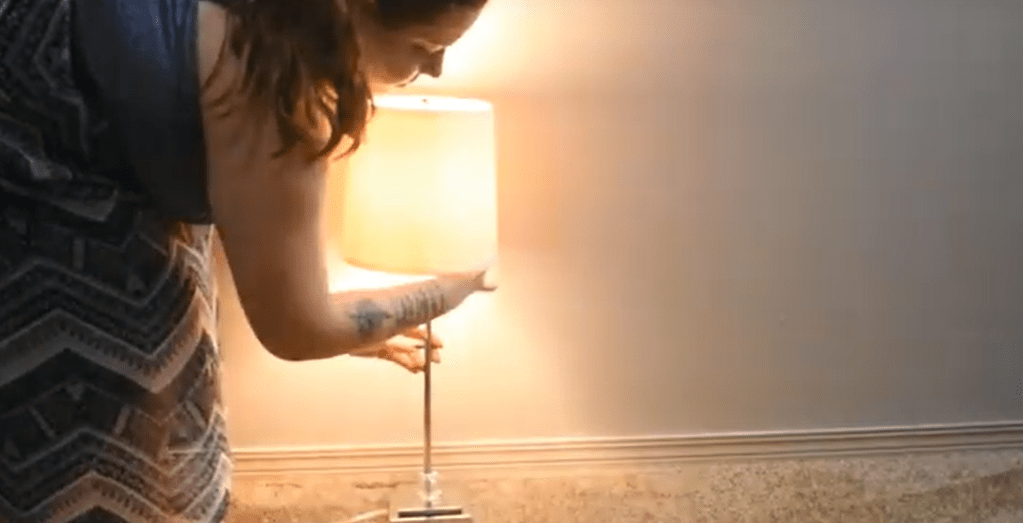
Three Lamp Events is one of many event scores in his book/event score collection Water Yam. A performer taking the piece literally would interpret Three Lamp Events as switching the lamp on, off, a brief pause to acknowledge the lamp, leave the lamp off, and then switch it back on again. This video below demonstrates this perfectly.
To perform the piece in this manner limits the ability for the piece to say anything more than a surface level commentary on what art can be. It’s just an absurdist performance piece, nothing that the Dada movement didn’t say. Duchamp presented Fountain in 1917. To think that Brecht wasn’t adding to the conversation on “what art is” in the half decade since is insulting.
The deeper you look at the piece, the more interesting it becomes. Staying somewhat literal, a problem within the piece is that you have to turn the lamp off twice in a row without turning it on. One may turn the light back on during the “lamp” prompt, or not acknowledge the two separate “off” states but to do so is to forfeit the playfulness of it all.
The performer might realise that “on” and “off”, though heavily implied to be the state of the light in the lamp, is not the only possible interpretation. Maybe, placing the lamp on and off of objects still counts as fulfilling the prompt “on” and “off”. Maybe, as demonstrated below, the performer might recognise that the utilisation of another light to spotlight the lamp helps with both establishing the “lamp” and to turn “off” twice.
But is the lamp literal? Underneath the piece, a quote attributed to J. Ray (presumably Ray Johnson) reads “it is sure to be dark if you shut your eyes”. Following the quote’s line of logic and one could conclude that the “lamp” could very well be a metaphor for your attention. To be “off” is to consciously be inattentive, while to be “on” is to be actively aware. The instruction “lamp” then feels like an act of identity: you are nothing but a lamp, switching your attention on and off. As such, a possible performance might go as follows:
focus on your surroundings.
shut your attention off and close your eyes.
look within yourself. are you nothing more than a machine, a light switch, turning on and off your attention? could you be something more?
stop thinking. eventually, open your eyes, and view the world.
Of course, this is just one possible interpretation. Additionally, as introspective as my take on Three Lamp Events is, there is a lack of theatrics, a component that the literal take on the piece carries in spades.
This isn’t to say you couldn’t perform it, or make it performative. An underrated factor about text scores is that what they don’t say is also incredibly important, because it gives the performer, as a unique artist, to bring themselves into the piece.
I would like to see less literal interpretations of text. Does that make me pretentious and not fun at parties? Probably. But I think that I’m happy to risk my social credibility in the name of creating more interesting art.
 izzy french.
Leave a Reply